COLONIAL DREAMS AND INJUSTICE
TFLAC Preserves Histories that Once Mattered — And Still Do.
Date: July 4, 2026
PART 1 This is the first in a series of reflections on Boxing, Race, and America’s 250th Anniversary. It is also a companion presentation to the TFLAC Inaugural Welcome.
By Dan Perkins, Founder and Director, THE TRIPLE FIGHT MUSEUM / TFLAC
A Shifting Foundation
America was formed by European powers seizing control of what they called the New World — as though it magically appeared on a map. England, Holland, Spain, and France were the principal colonizers, each contending with the others as they sought to maximize their dominion.
Colonialism is not a quaint historical designation. It is a formidable social, economic, political, and religious construct in which a dominant power takes possession of and control over the people, culture, identity, and resources of a lesser power, and manipulates them for its own benefit. Understanding this is essential to understanding what the Fourth of July actually commemorates.
Before the colonizers established the thirteen colonies that would become the first iteration of America, they realized that transforming “a new land” into their own image required labor on a scale that neither they nor indentured servitude nor cooperation with indigenous peoples could deliver, let alone sustain. They, along with other European colonizers, concluded that the people of Africa could be engineered into a permanent and subordinated caste — their color as their identifier. Stripped of language, culture, and kinship, kidnapped Africans were savagely driven to produce the wealth that funded the settlers’ dreams and ambitions. And it was slave-generated wealth, and the hope for more of it, that helped fuel the revolutionary fervor behind the Declaration of Independence.
No celebration of the Fourth is complete or honest without remembering that the Declaration of Independence did not extend to the very people whose labor helped build America. Race and notions of a divinely appointed racial hierarchy have always been central to the American story. The enslaved were regarded as mere chattel — legally defined as three-fifths human. The reality of this distorted view of humanity sits at the foundation of both the 250th celebration of America’s independence and the emergence of boxing as the first global super sport of the modern era. The two histories are not parallel. They are intertwined.
Tom Molineaux: Freedom Found in the Ring
What is missing from so many celebrations of America’s independence is consideration of what the settlers’ fight for independence meant to and for the enslaved. The British understood the contradiction inherent in the Declaration of Independence more clearly than most Americans were willing to admit. The British offered enslaved people their freedom in exchange for service and loyalty to the Crown. George Washington, himself an enslaver, made no matching offer. He could not. The wealth and power he and his contemporaries had amassed and enjoyed came through human bondage. He knew his beloved home and lifestyle would not survive a blanket extension of inalienable rights to all, particularly not to those he enslaved.
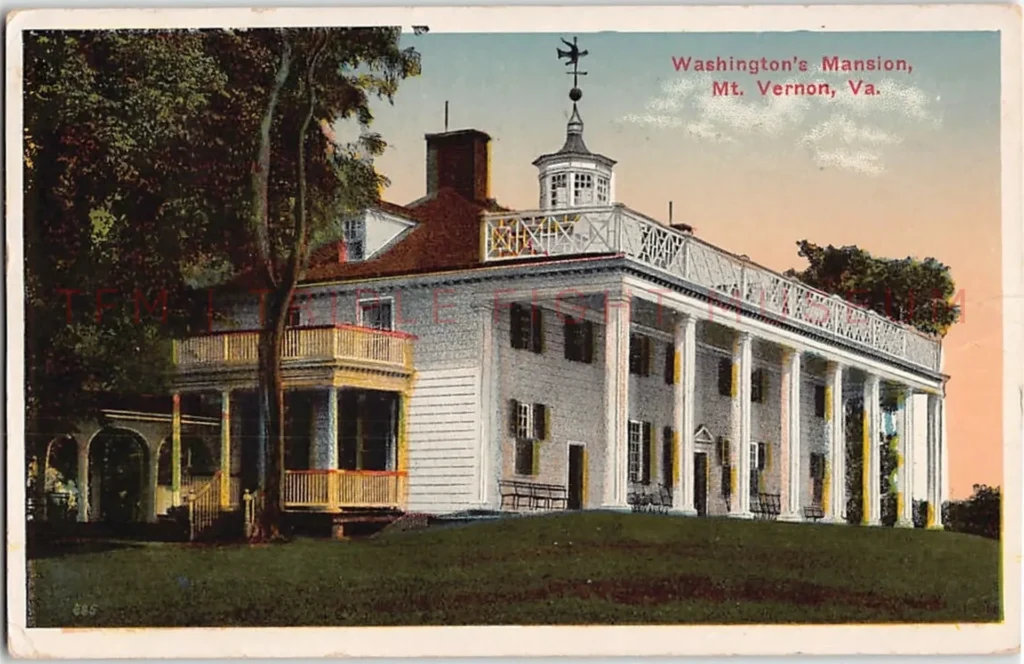
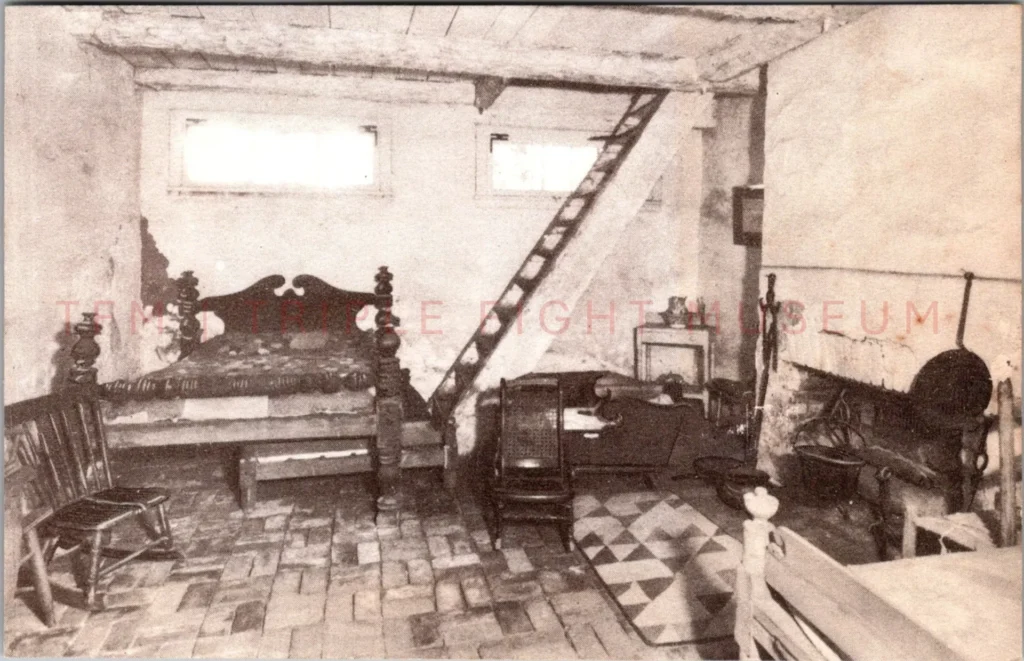
Below are two views of structures at Mount Vernon, George Washington’s estate in Virginia. The top postcard depicts Washington’s home. The bottom postcard reveals the interior of quarters reserved for Americans whom Washington enslaved. Both are knit together — not only to themselves, but also to the story of America and its quest for Independence.
Despite slavery being a harsh and defining reality of life for many in America, at its founding, freedom still managed to find its way to enslaved individuals, here and there, sporadically bestowing itself upon the oppressed, one chance moment at a time. Such was the case for an enslaved man named Tom Molineaux, who gained his freedom through the boxing ring.
According to written accounts, a Virginia enslaver wagered much of his wealth on a boxing match involving one of his slaves. He promised the enslaved boxer his freedom if he won. Tom Molineaux that boxer, and he won the battle, and his enslaver freed him.
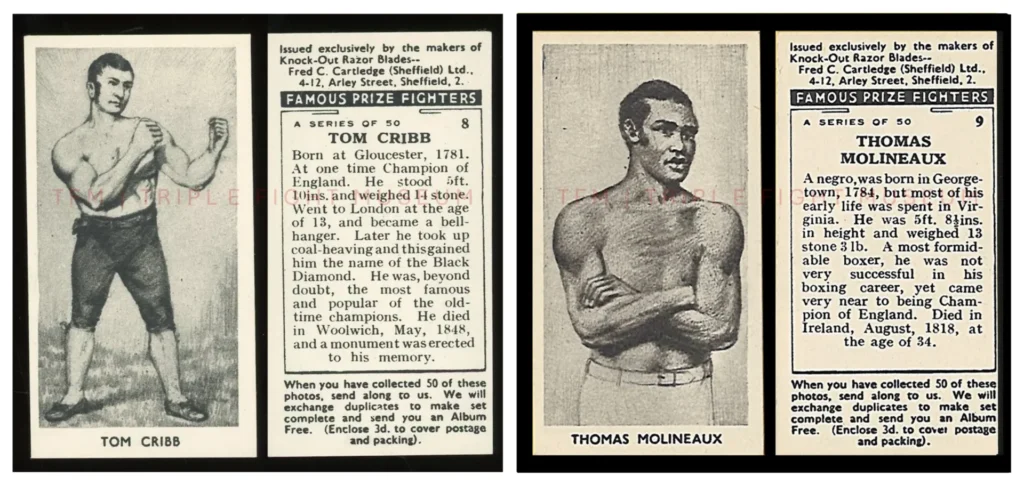
Now liberated, Molineaux set out on a course that carried him to England, where he joined other formerly enslaved men who were distinguishing themselves as free competitors. He quickly made a name for himself and was eventually matched against England’s national heavyweight champion, Tom Cribb. The two men fought two celebrated battles in 1810 and 1811. Although Molineaux lost both matches, he subsequently joined Cribb in exhibition bouts across the British Isles.
Within those Isles, Tom Molineaux was not only free but also a superstar of sorts, competing with a national champion on the global stage. His story emerges from the confluence of boxing and the fight for human dignity. It demonstrates what becomes possible when freedom rings — and it illustrates how far possibilities can extend when the boxing ring becomes a platform instead of a cage. Below are two cards, numbered 8 and 9 out of a series of 50 prizefighters, that depict Cribb and Molineaux. The promotional cards offer tributes to each man and to the extraordinary platform boxing afforded them, particularly Molineaux, who lived in a time when most sons of Africa, who were in the supposed New World, were enslaved, not free.
The Color Line: Peter Jackson and the World Jack Johnson Inherited
Sixty years after Molineaux’s exploits, Abraham Lincoln realized that force was required to break the nation’s addiction to wealth generation through human exploitation. He issued the executive order abolishing slavery in the Confederate states — and when a band of Texans refused to comply, he ordered federal troops to Galveston to enforce it. That order, carried out on June 19th, 1865, and now celebrated as Juneteenth, set in motion the circumstances that would produce, forty-three years later, the first Black man to hold the World Heavyweight Championship, Jack Johnson.
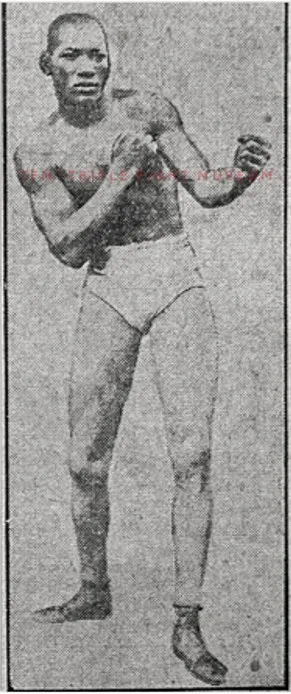
Shown left is a newspaper photograph of a very young Jack Johnson, who grew up in Galveston, Texas, with his siblings. His parents had been enslaved.
The road between emancipation and Jack Johnson’s title was not an open one. The reality is that it was actively and persistently obstructed, as Peter Jackson, a Caribbean-born boxer nicknamed The Black Prince, discovered.
Jackson’s boxing career spanned 17 years, from 1882 to 1899. As he rose toward the sport’s highest level, America’s heavyweight champion, John L. Sullivan, formally instituted what became known as the Color Line — the practice of denying title opportunities to Black challengers. Jackson, who had immigrated from St. Croix to Australia and become that country’s heavyweight champion, was more than qualified to issue a challenge. He repeatedly but unsuccessfully tried to convince Sullivan to give him a chance at the title. What Jackson failed to realize was that in America, the door of opportunity had been closed to him long before he ever reached for it.
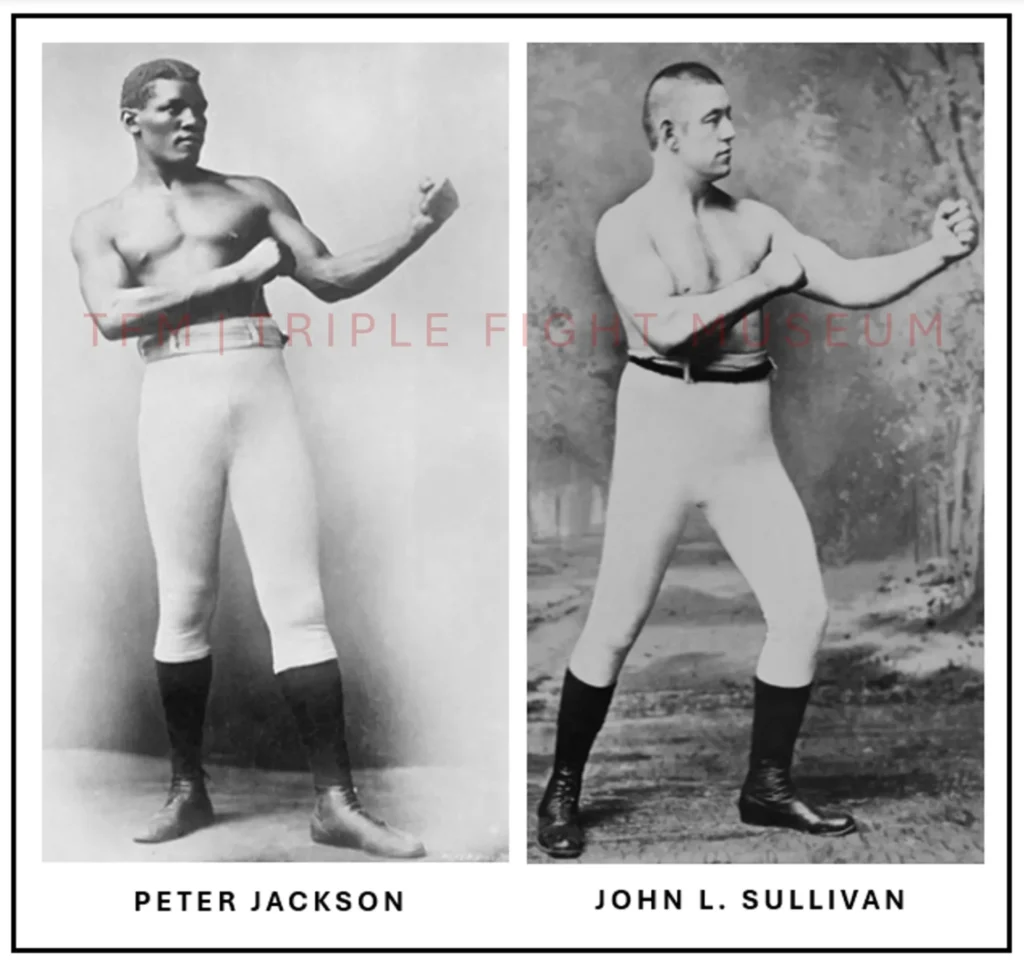
In 1892, Jackson went to England to battle a fellow Australian named Frank Slavin at the National Sporting Club in London. The men were fighting for the British Empire Heavyweight Championship. Jackson won decisively and, in doing so, became part of a dual structure within the sport — a structure in which Sullivan maintained the world title by restricting himself to white challengers, while Jackson held the championship he earned in a realm that was a bit more accepting of human excellence across all races.
Two men. Two championships. Two versions of what the world was and what it could be.
This inaugural edition of TFLAC features an article published in the January 27, 1910, edition of BOXING WORLD AND ATHLETIC CHRONICLE, a British weekly sports magazine. The article revisits the 1892 contest between Slavin and Jackson, eighteen years after the fight. The author looked back at that celebrated fight with sensibilities reflecting the year 1910 — a year in which the question of who could hold the heavyweight title, and what that title meant for the racial order, had become the most urgent sporting question in the world. At the center of that urgency was dismay that Jack Johnson had become the first Black man to hold the World Heavyweight Championship.
Regardless of whether we discuss the year 1776 or 1910, the problem European settlers and their descendants faced was that Greatness, defined in Euro-American terms, could not be achieved or manifested without the input and excellence of individuals of the Black race. America’s ongoing refusal to acknowledge that reality leaves celebrations of the Declaration of Independence a shallow bombast, as Frederick Douglass called it.
Truth is pursued. History is honored. Humanity is centered.
TFM — In the FIGHT FOR GOOD
See More