THE TRIPLE FIGHT IN BLACK AND WHITE – PRINT
BOXING IN 1910
AS REFLECTED IN EUROPEAN PUBLICATIONS
Index of Publications in the TFM COLLECTION
BRITISH SPORTS MAGAZINES
BOXING WORLD AND ATHLETIC CHRONICLE
Every Thursday. Half Penny
JANUARY 1910
Week 01
Jan 02 – 08
Week 02
Jan 09 – 15
Week 03
Jan 16 – 22
Week 04
Jan 23 – 29
Week 05
Jan 30 – Feb 05
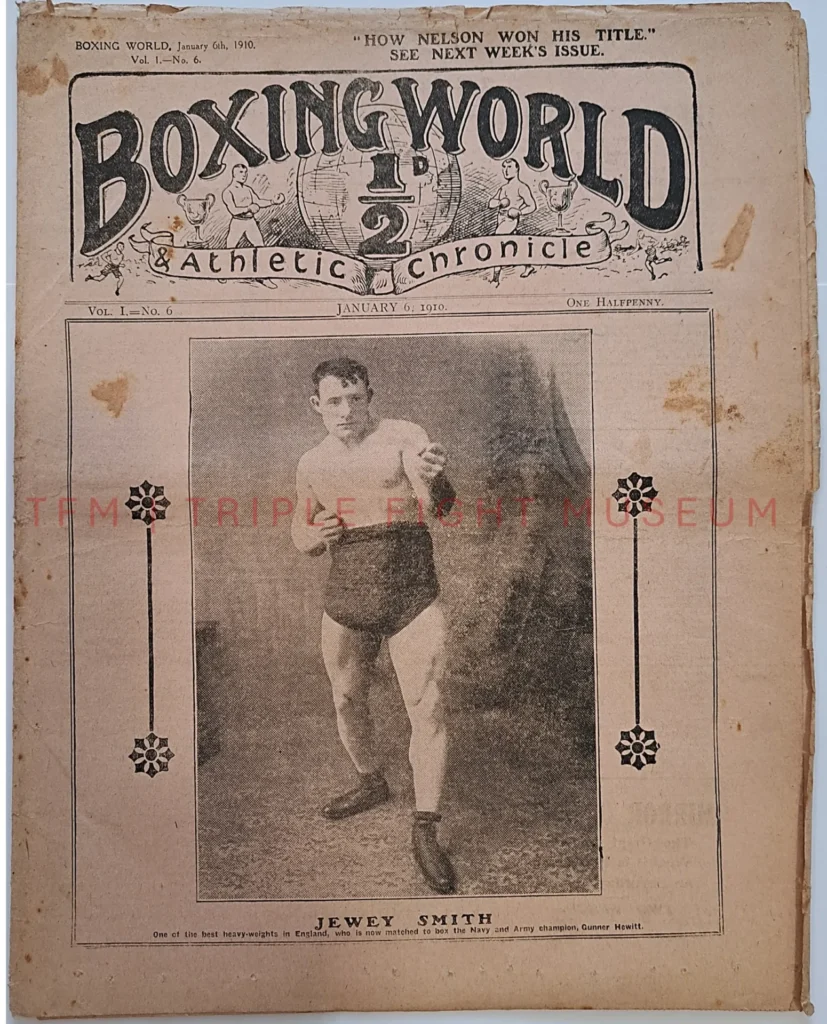
January 6, 1910
Vol. 1 No. 06
Edition Not Yet In TFM Collection.
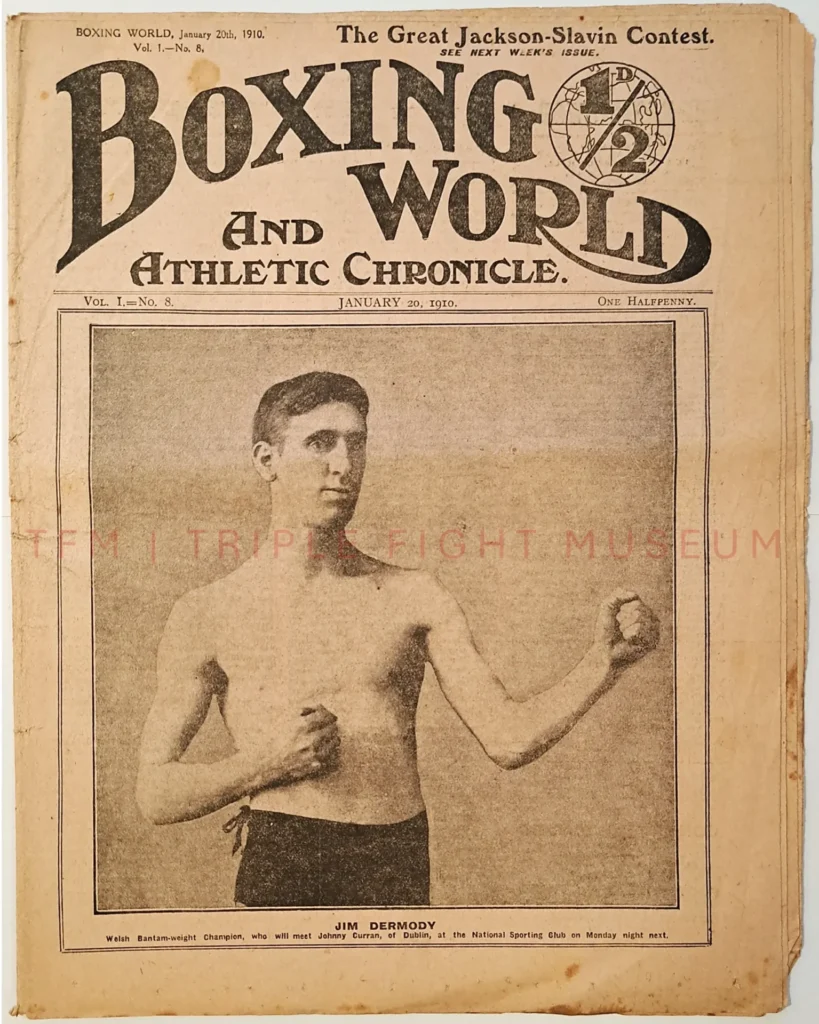
January 20, 1910
Vol. 1 No. 08
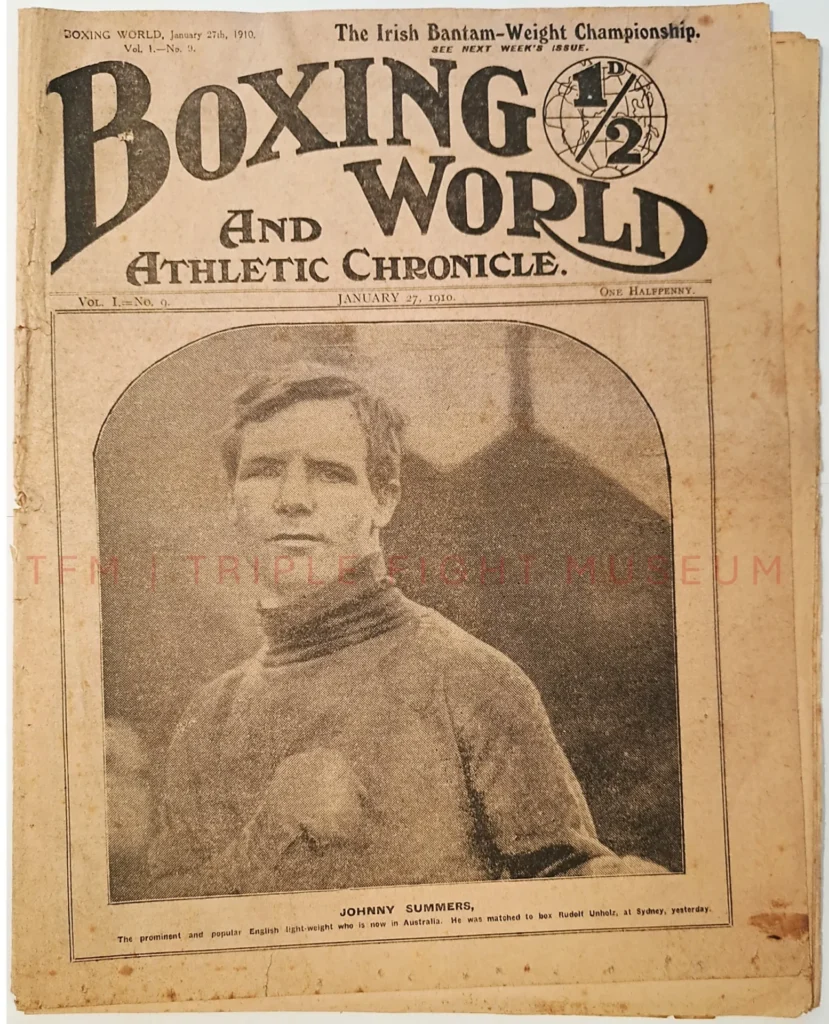
January 27, 1910
Vol. 1 No. 09
–
Vol. 1 – No. 06.
January 6th, 1910.
Caption Reads:
JEWEY SMITH.
One of the best heavyweights in England, who is now matched to box the Navy and Army champion, Gunner Hewitt.
TFM Offers Three Reflections on the Contents of this Publication:
1
A Rare 1909 Photograph Taken Before the Start Of A Charity Boxing Match Benefitting A Prizefighting Legend
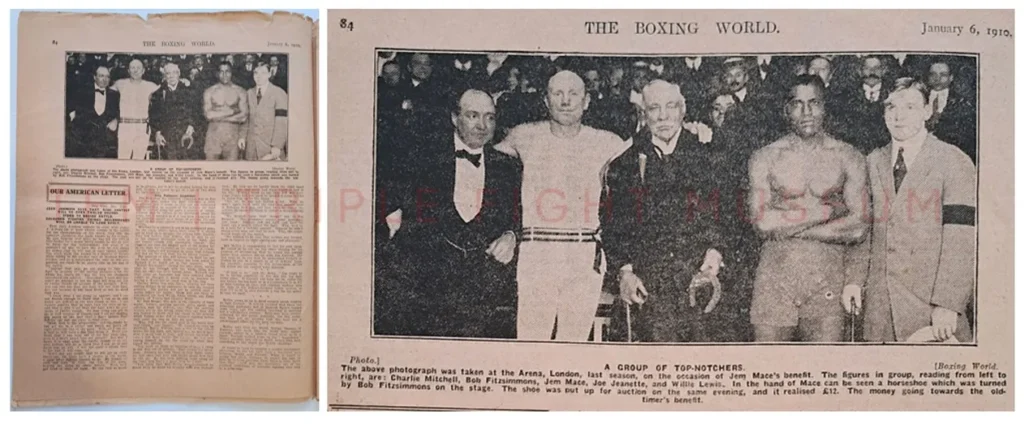
Caption Reads:
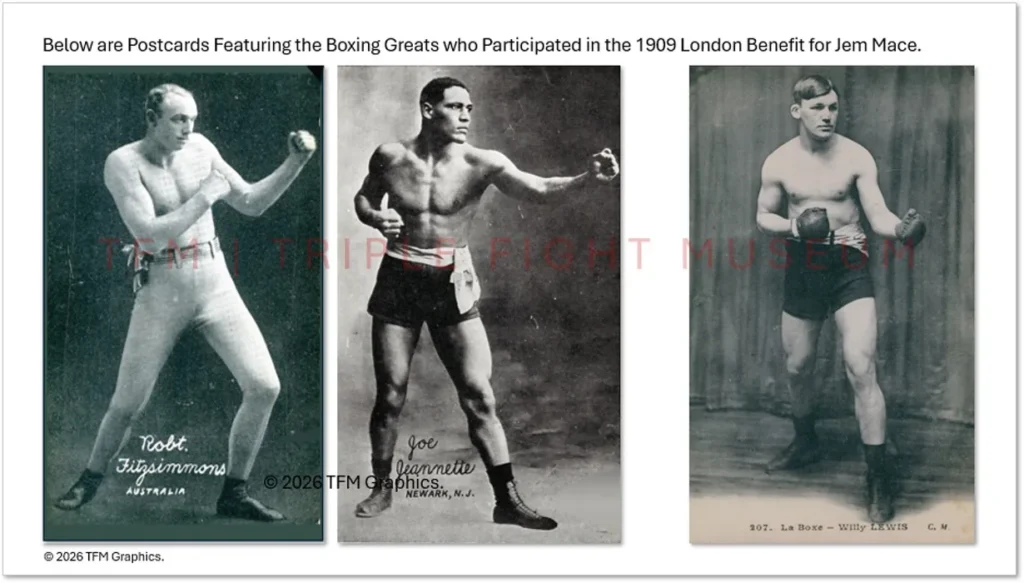
The above photograph was taken at the Arena, London, last season, on the occasion of Jem Mace’s benefit. The figures in group, reading from left to right, are: Charlie Mitchell, Bob Fitzsimmons, Jem Mace, Joe Jeanette, and Willie Lewis. In the hand of Mace can be seen a horseshoe which was turned by Bob Fitzsimmons on the stage. The shoe was put up for auction on the same evening, and it realised £12. The money going towards the old-timer’s benefit.
TFM — Connecting the Dots:
Two Rivals Returned to the Ring — Decades Later — for Charity
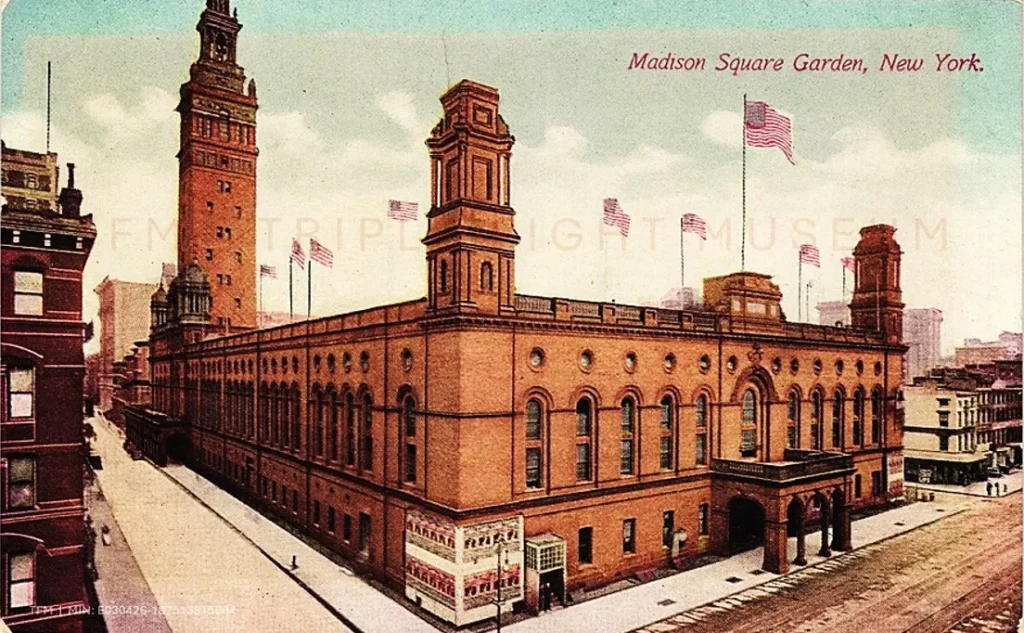
The above postcard in the TFM Collection offers a splendid view of the old Madison Square Garden.
Charlie Mitchell, (shown far left in the above photograph), is perhaps best remember for his battle with John L. Sullivan in 1883, in a bout designed to determine whether the United States or Great Britain would claim the title of World Heavyweight Championship. The fight was held at Madison Square Garden in New York City, with Sullivan being awarded the match.
Connecting the Dots
The TFM Collection includes a rare edition of Famous Fights depicting Bob Travers-The Black, as he was called, having a difficult time with Jem Mace.
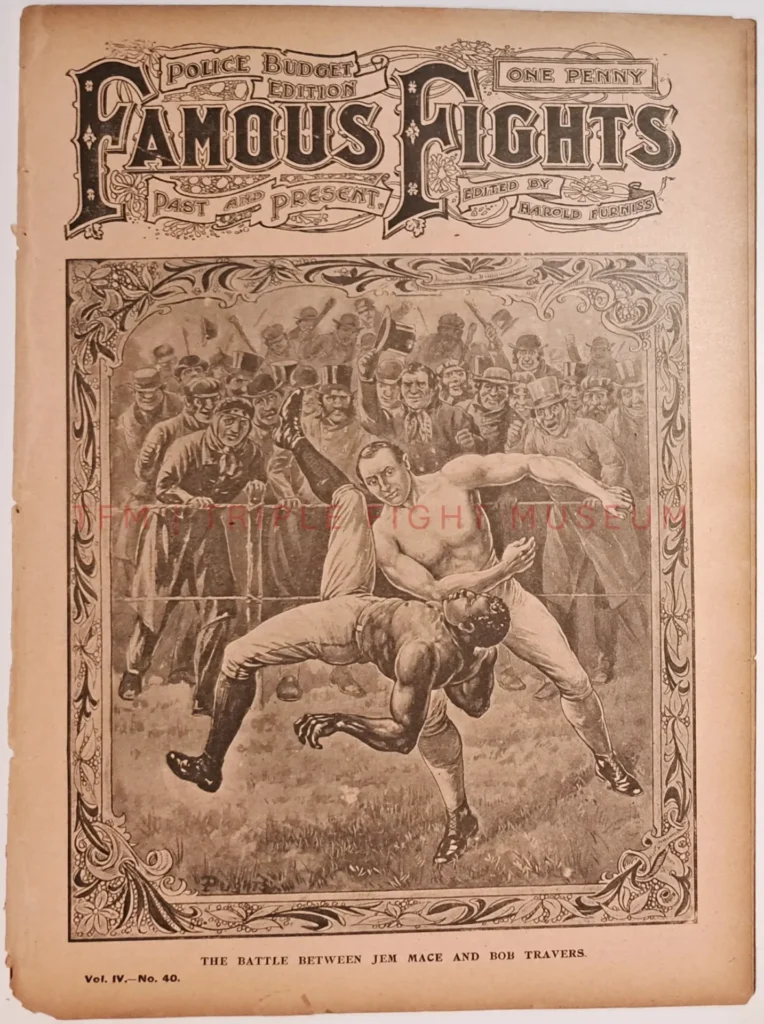
FAMOUS FIGHTS
Vol. IV. – No. 40.
THE BATTLE BETWEEN JEM MACE AND BOB TRAVERS
Jem Mace (the Beneficiary of the Charity) was a popular British prizefighter during boxing’s bare-knuckles era (pre-1890s). He was celebrated as the World Heavyweight Champion from 1870 to 1871 and is credited with helping to fuel the popularity of boxing in Britain and the United States.
What makes Mace a notable figure for TFM is his willingness to engage men of color, beginning with Bob Travers, a Black man living in Britain. Mace and Travers engaged in athletic competitions, during America’s Civil War. The contrast between life for Blacks in Britain, though not perfect, and life in America was striking. During the 1880s, Mace toured the U.S. with Herbert Maori Slade, a New Zealander of Irish and Maori heritage, and the two conducted exhibitions in California, New York, and Pennsylvania.
In 1890, Jem Mace and Charlie Mitchel battled one another to determine which would hold the title of Heavyweight Champion of England. The honor went to Mitchell. The photo above shows that Mitchell was recognized at the benefit for Mace.
In 1895, Mace returned to the U.S. for a battle with Mike Donovan, of Australia, held in New York City. That fight ended in a draw, as did their second and final meeting in 1897. Mace retired after his second match with Donovan, which was held in his home country.
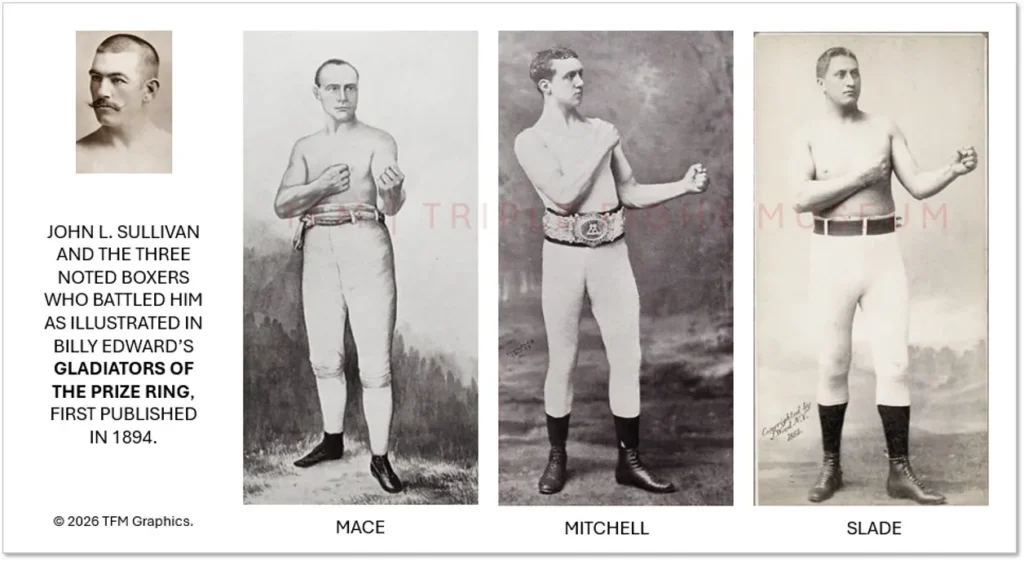
The three other boxers shown in the photograph also warrant mention. Bob Fitzsimmons was the only Brit to hold the World Heavyweight Title, and later the Light Heavyweight Title during THE TRIPLE FIGHT. Joe Jeannette was a popular figure in Europe during the years leading up to WW1. Jeannette briefly held the World ‘Colored’ Heavyweight Title before returning to the United States, where he opened a boxing training facility in Hoboken, New Jersey, along side a livery service. Willie Lewis, was a popular American welterweight who made France his second home. He lived in Paris through WW1, witnessing and surviving German aerial bombings of that city.
2
Two Rare Early Photographs of International Boxers Who Had A Hand In The Making Of Boxing Champions.
TFM — Connecting the Dots:
Here we reference other items in the TFM Collection to gain greater insight and understanding.
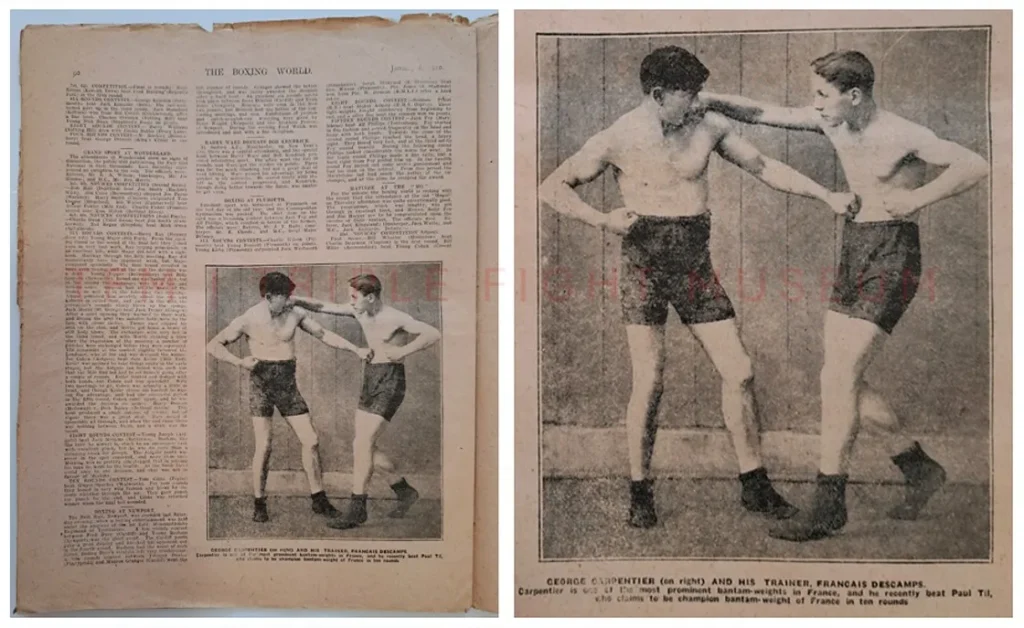
Georges Carpentier is more than a Featured Boxer at TFM, he is one of a handful of boxers that contribute profoundly to our understanding of THE TRIPLE FIGHT, not only in America, but in Europe as well. His is pictured in this publication just as he was becoming a young man. Four years after this publication featured him, Carpentier would be serving his country, both as a motivational boxer and a member of France’s military aviation corp.
Carpentier, a champion boxer, decorated war hero, a film-star, and a man who capitalized on racial divisions, reveals THE TRIPLE FIGHT on a global scale.
Caption reads:
GEORGE CARPENTIER (on right) AND HIS TRAINER, FRANCAIS DESCAMPS.
Carpentier is one of the most prominent bantam-weights in France, and he recently beat Paul Til, who claims to be champion bantam-weight of France in ten rounds.
Caption Reads:
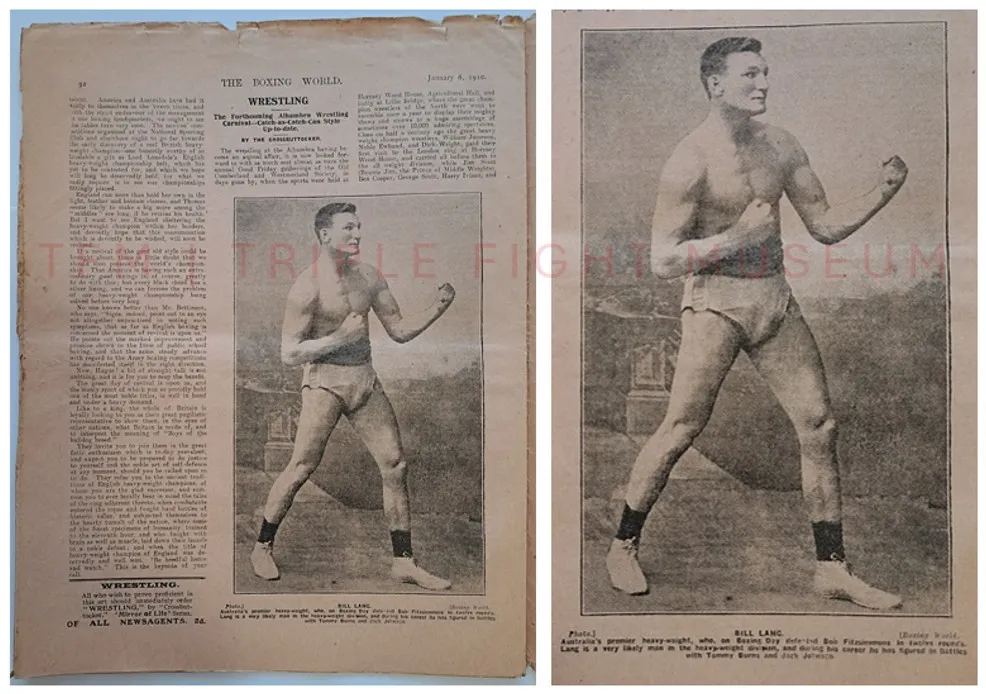
BILL LANG
Australia’s premiere heavy-weight, who, on Boxing Day (December 26th) defeated Bob Fitzsimmons in twelve rounds. Lang is a very likely man in the heavyweight division, and during his career he has figured in battles with Tommy Burns and Jack Johnson.
FAST FORWARD with a CLOSER LOOK:
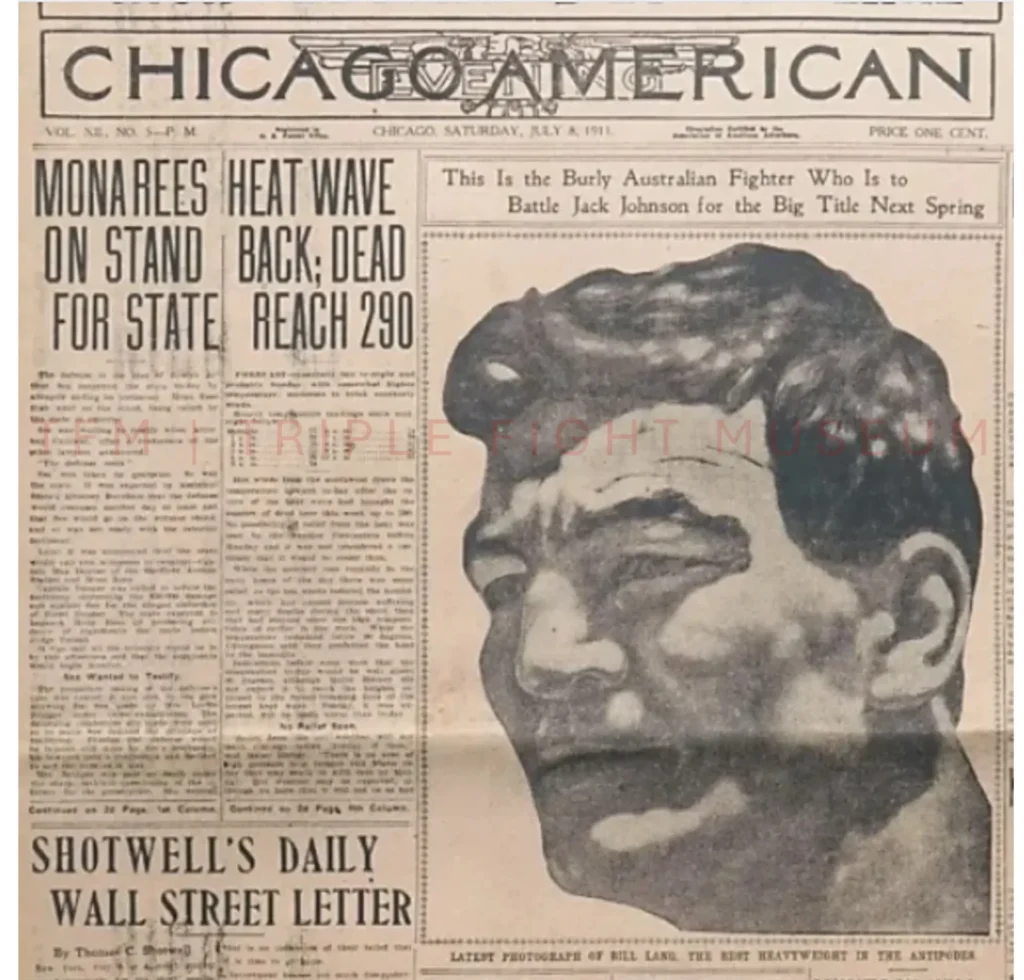
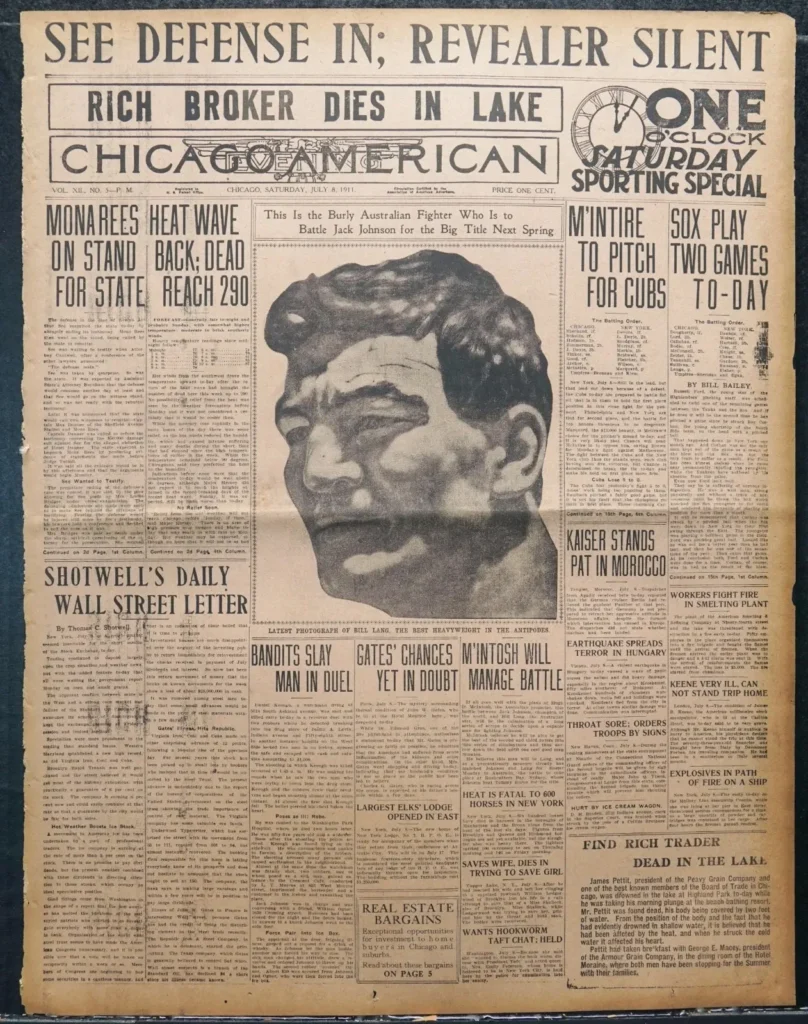
BILL LANG, as he was illustrated in the July 6, 1911 edition of the CHICAGO AMERICAN.
Top Caption Reads:
This is the Burly Australian Fighter Who Is to Battle Jack Johnson for the Big Title Next Spring.
The TFM Collection includes the page shown from the Saturday, July 6, 1911, One O’clock edition of the CHICAGO AMERICAN, which provides a strikingly different view of Bill Lang.
Bottom Caption Reads:
LATEST PHOTOGRAPH OF BILL LANG, THE BEST HEAVYWEIGHT IN THE ANTIPODEN
NOTABLE DISCOVERIES
Do You Know What The Antipoden Is?
We did not, so we turned to our friends at Wikipedia, and they provided a useful answer. Click here to see.
TFM — Connecting the Dots:
Here we reference other items in the TFM Collection to gain greater insight and understanding.
A year and a half after Bill Lang was featured in BOXING WORLD, a much older-looking illustration of the Australian boxer appeared in a Chicago newspaper along with a claim that he, Bill Lang, would challenge Jack Johnson for the World Heavyweight Championship the following spring. The claim proved inaccurate.
In 1911, Lang unsuccessfully challenged two prominent Black boxers of his day, Sam Langford and Sam McVey, but he never fought Johnson once Johnson became World Champion.
The newspaper’s claim illustrates one of the ways early 20th century American media — intentionally and unintentionally — printed unqualified statements and declarations. Why? Primarily to sway public opinion and expectations.
Such practices leaves one to wonder whether they continue today, and if so, why. How does the public benefit from the promulgation of unsubstantiated statements and claims.
3
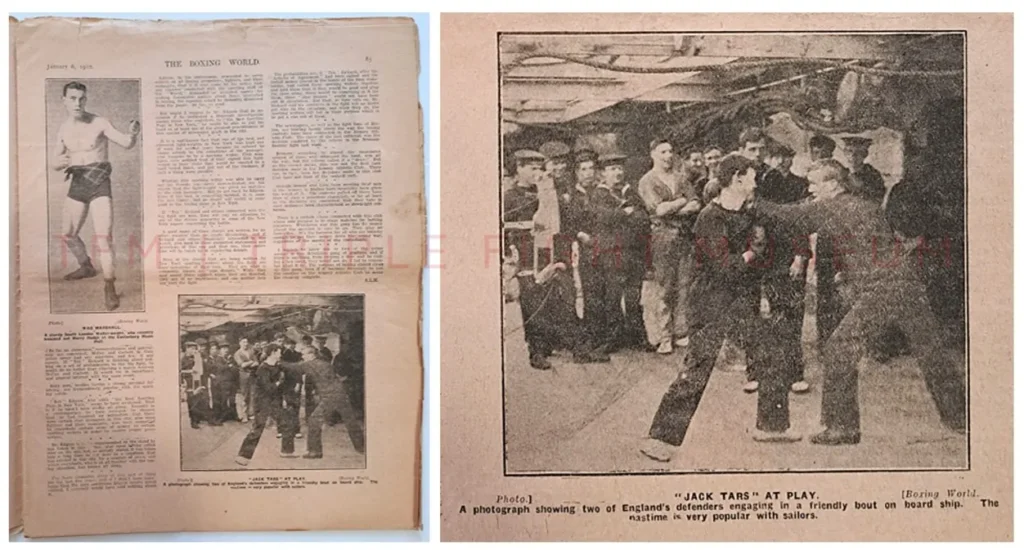
One Photograph Reflected THE TRIPLE FIGHT Beyond America By Featuring The Popularity Of Boxing Among Sailors In The British Navy.
Caption reads:
A photograph showing two of England’s defenders engaging in a friendly bout on board ship. The pastime is very popular with sailors.
TFM — Connecting the Dots:
Here we reference other items in the TFM Collection to gain greater insight and understanding.
During the 1900s and 1910s, the British Empire was so vast that a common saying of that era was: The Sun Never Sets On the British Empire, meaning anywhere the sun shown, Britain held claim to a portion of the land or waters. That claim was substantiated by a vast and powerful Navy — and boxing was, and remains, part of British Naval tradition and history.
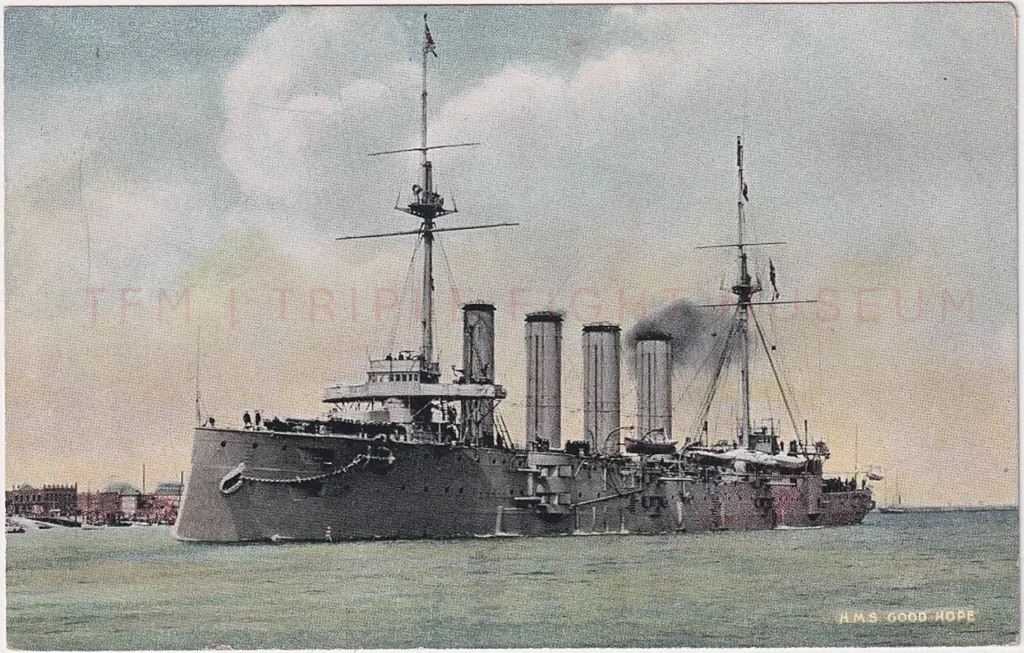
Shown above is a postcard from the TFM Collection for Britain, depicting a British naval vessel, HMS Good Hope.
See More